Showing posts with label WESTERN CAPE. Show all posts

Sunday, November 8, 2009

Marine scientists and recreational fisheries cooperate in research effort on smoothhound sharks

6 November 2009

The Department of Environmental Affairs' marine and coastal management branch and the West Coast Shore Angling Association are jointly hosting a smooth hound shark tag and release tournament on Saturday 7 November 2009 at the Langebaan Lagoon on the West Coast, Western Cape. This forms part of research into the population of smooth hound sharks in the Langebaan Lagoon system.

This tournament, known as the Langebaan Lagoon Smoothhound Shark Derby, is aimed at promoting collaborative opportunities between marine scientists and fishers to strengthen the sustainable management of marine resources. It will further assist with the existing research on the smoothhound shark population in Langebaan Lagoon.

Recent studies have shown that the Langebaan no-take fishing area is a nursery ground for smoothhound sharks. It also shows that smoothhound sharks spend up to 99 percent of their time inside the Langebaan Lagoon Marine Protected Area (MPA) with larger more mature animals more likely to leave the protection of the lagoon than smaller sharks. The tag and recapture experiment will help to identify the stock size of the population of these species within the Langebaan–Saldanha bay area and the results will inform the management of these species.

This competition does not only represent an exciting angling experience but also an opportunity for anglers to actively participate in research on a locally important species aimed to assure the sustainable management of the smoothhound shark, based on sound scientific knowledge.

Only anglers who are registered members of the South African Shore Angling Association (SASAA) will be accepted to fish in this tournament. A maximum of 150 anglers will be allowed to participate. The West Coast Shore Angling Association is a member of the South African Association of Audiologists (SAAA).

The derby is taking place from 5h00 when registration starts at the Langebaan Yacht Club. Angling will be from 06h00 until 15h00.

For further information contact:
Carol Moses
Cell: 082 829 3917
E-mail: cmoses@deat.gov.za

Issued by: Department of Environmental Affairs

News sponsored by West Coast Office National, for all your printing & Stationery requirements

Thursday, October 15, 2009

Three Cities bags Queensgate Hotels management account, Shelley Point Hotel is part of the group.

Three Cities Management Limited (“Three Cities”) today announced that they have entered into an agreement with Queensgate Hotels & Leisure Limited (“Queensgate”). The agreement will see Three Cities taking over the management of all Queensgate Hotels with immediate effective, on a fee sharing basis. The deal will see the Three Cities room stock grow by an additional 600 rooms within 8 hotels and by early 2010 a further 400 rooms – putting the growth at almost 50% over the next 6 months.

Mike Lambert, Chief Operating Officer of Three Cities commented, “We are excited about the long term opportunities that this reciprocal agreement brings. Our alliance will enable us to capitalise on each other’s strengths and focus on core competencies, where we look forward to developing internationally and growing our local destinations.”

Another opportunity will see Three Cities offering the hospitality industry training in world class Spa operations, based on Queensgate’s One Wellness Spa Division, this will be offered by Three Cities educational training division The International Hotel School.

The second phase of the symbiotic relationship will see Three Cities hand over its hotel development opportunities to Queensgate Business Development, a subsidiary of Queensgate. This will effectively mean that all business development for both groups will be handled by Queensgate, being a core competency of theirs.

Three Cities Group manages and markets over 40 quality tourism and leisure properties. Their unique portfolios of properties include City Hotels, Resorts, Exceptional Safaris and the Exceptional Collection, as well as three campuses of The International Hotel School, an Equestrian Academy and the largest Marine Theme Park in Africa – uShaka Marine World in Durban. Their highly regarded services will give the Queensgate hotel portfolio the management expertise, sales, marketing and online reservations, resulting in building the Queensgate individual properties reputation in the market place.

Queensgate Hotels and Leisure CEO, Andrew Hubbard, comments: “We are excited about this agreement which will not only see our hotels managed by the exceptional Three Cities, but also transfer reservations for our hotels to Three Cities’ sophisticated online reservation service which will enhance our customers’ experience. In addition, the link with Three Cities will strengthen the position of Queensgate hotels in the corporate, government and domestic sector, an area in which Three Cities has traditionally been and is very strong.”

The Queensgate portfolio being managed by Three Cities include the following:

  • Park Inn, situated on the historic Greenmarket Square of Cape Town is ideally located for the vibrant business and government traveller, with 144, four star rooms.
  • Hollow on the Square is situated in the heart of the city of Cape Town and within walking distance from the International Convention Centre (CTICC) and the V&A Waterfront. With stylish and modern accommodation this hotel offers 116 rooms in a 4 star environment.
  • Cape Town Hollow Boutique Hotel, nestling in the shadow of Table Mountain. This 4 star Hotel offers stylish serene accommodation with spectacular views from its 56 rooms.
  • Rockwell All Suite Hotel inspired by buildings from the turn of the last century in downtown Manhattan, New York, this 4 star executive apartment hotel displays an inherent richness and warmth in 55 apartments.
  • Shelley Point Hotel, Country Club & Spa is nestled on the silvery white sands of lush green Peninsula Village of Shelley Point, on the Western Cape coastline. This 4 star, 80 room hotel is situated approximately 90 minutes from Cape Town.
  • The Avenue Hotel was established in 1936, the 4 star Hotel is situated on the False Bay coastline in the small town of Fish Hoek and offers 51 en-suite rooms.
  • The Alphen Hotel is a National Monument, a historic 21 room Country Manor House which offers more than just accommodation. It is the heart of a former Wine Estate, centrally situated in the Peninsula and at the gateway of the Constantia Valley and Wine Route.
  • Tinga Private Game Lodge situated on the banks for the Sabi River in prime game viewing area of the Kruger National Park. This 5 Star lodge is located near Skukuza and has 18 chalets in 2 Camps.
Sponsored link by West Coast Office National - Printing & Stationery

Tuesday, October 13, 2009

Langebaan Goes Ballistic Over Boom

Caitlin Ross

7 October 2009

The erection of a swivel-boom on the road between Langebaan and the West Coast National Park by property developers has enraged members of the Langebaan community who have fought a 20-year battle against development on the land.

Concerned Langebaan residents say it's the latest move by the developers to intimidate members of the community and a step towards the target of shutting off access to the road entirely.

The road is one of the two that lead directly to the West Coast National Park and the only one that links it to the town of Langebaan, and the question over whether or not the road is private or public is being disputed by both sides.

Developers Dormell 391 issued an official statement saying their proposed housing development in the buffer zone between the park and the Langebann urban edge - which is opposed by SANParks, the West Coast National Park and local community groups - has for five years been unfairly denied approval.

Dormell 391 claim to have a zoning certificate and the approval of a final court order for township development and if their development continue to be stymied will change their "current goodwill" of allowing the public to use the road and close it off, denying access to the park's northern gate and the beach at Shark Bay.

"The boom has been installed as the property is private property and we reserve the right to close it at our discretion and if our applications are not now finalized and the company continues to be so unfairly prejudiced," stated the company.

But various parties have rubbished the claim that the road is private property, saying it is a proclaimed public road under the jurisdiction of the district municipality. Email correspondence between convenor of the Langebaan Action Group, Johan Ackron, and Pieter Pienaar of the Department of Transport and Public Works, contains maps showing the road is marked "Afdelingspad 1162รข-', a public road, the obstruction of which is illegal.

Manager of the West Coast National Park, Xola Mfeke, said he was "very concerned that traffic will be blocked" as 45 per cent of the Park's visitors (about 50 000 of the 130 000 people annually) enter the park through the northern gate.

"I don't believe he has a legal right to do it. I contacted the roads department in Ceres and they confirmed that it's a public proclaimed road. I'm just not happy that he has not consulted the neighbours in doing something major like that. It's not nice to wake up and see a boom outside your park. He's promised that he would not close it but I'm prepared to open an interdict against him if he does," said Mfeke.

The point of dispute arises over the fact that in 1991 the road was realigned from a gravel road, Ou Wit Pad, to the tar one currently in use. The realignment constituted a shift of 700 metres at its extremity and therefore did not require re-proclamation. The original gravel alignment of Divisional Road 1162 along the lagoon edge has, because of the realignment, fallen into disrepair and is no longer appropriate for alternative vehicular access to the Park. Ackron said that in the confrontation that has arisen over the opposition to the development proposals, the developers have at various points expressed the intention of impeding access to the Park over the land traversed by the said road 1162.

In addition to the boom, fencing and signage posts have been introduced at various points along the road to the park gate. Ackron said that "no development permission has been granted" regarding the land (Oostewal 292) that would motivate such structures. Ackron is petitioning the district roads engineer, who is currently out of office, to have all the structures removed.

Quoted from http://www.flyafrica.info

Support local business on the West Coast www.shopwestcoast.co.za

Yzerfontein named as proposed site for third SA gateway

Johan Meyer

SA telecommunications network operators want to build a third international submarine cable landing station along the SA coastline to provide an alternative route for the landing stations at Melkbosstrand north of Cape Town and at Mtunzini north of Durban.

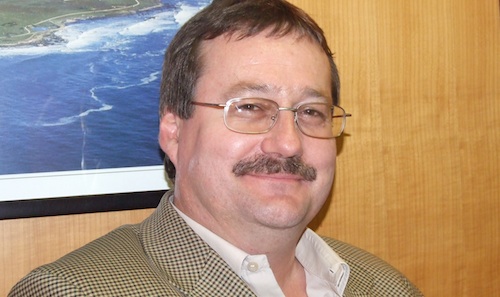
Speaking to TechCentral in Cape Town on Monday, Telkom executive for global capacity business, Johan Meyer (pictured), said the landing station would be built at Yzerfontein, 50km north of the Melkbosstrand facility.

However, the construction of the facility was dependent on the completion of a full environmental impact assessment. This assessment could take up to a year to complete, Meyer said.

He said it is now considered good practice for a country to have three international gateways to better cope with submarine cable outages caused by earthquakes, ships’ anchors and fishing trawlers.

Two international cables already land at Mtunzini, with a third, the East African Submarine System (Eassy), to land there next year. And Melkbosstrand is already home to Sat-3/Safe — which connects SA with Portugal and Malaysia — and Sat-2.

A third gateway would ensure that there is more than one fallback if there is a cut in connectivity at, say, Melkbosstrand.

The idea is to land the upcoming West African Cable System (Wacs) at the proposed new site at Yzerfontein.

Wacs is a high-capacity cable that will connect SA with the UK when it goes live in mid-2011. Telkom is an investor in Wacs. Other SA operators that have put money into its construction include MTN and state-owned Broadband Infraco. — Duncan McLeod, TechCentral

Wednesday, November 12, 2008

Marine Living Resources on the West Coast.

Before 1994, there was no formal space for poor fishers to access marine resources, so they used recreational permits to fish in open access areas. The fisheries sector has been industrialised since the early 1900s and resources are fully utilised, which means reallocation of fishing access rights are contested.

The ANC came to power on the election promises it made in the Reconstruction and Development Programme. This document was an integrated, coherent socioeconomic framework for dealing with the consequences of apartheid, including the alleviation of poverty and addressing the lack of services for the poor majority.

Among others, it sought to uplift impoverished coastal communities through ensuring that they could gain access to marine resources.Marine resources must be managed and controlled for the benefit of all South Africans, especially those communities whose livelihood depends on resources from the sea.

The democratic government must assist people to have access to these resources. Legislative measures must be introduced to establish democratic structures for the management of sea resources.


The new government set itself the task of formulating a fisheries policy that would address popular expectations for a more equitable redistribution of access rights, while maintaining an internationally competitive fishing industry.

To what extent has the government succeeded in restructuring access to marine resources to alleviate poverty and reduce the vulnerability of poor fishing communities?

Vested business interests succeeded in convincing the government that, in order to safeguard the prospects for international investment, there should be no deviation from free market principles.

Two years into democracy, the post-apartheid reform agenda had become a neo-liberal one which included privatisation, the removal of government subsidies, downsizing the public sector, and the encouragement of small black enterprise.

Although government programmes were intended to achieve both economic growth and equity, these efforts did not create jobs for the poor and unemployed.

The new government overlooked the progressive intentions in the RDP in favour of neo-liberal policy prescriptions. Fisheries policy was formalised in 1998 with the passing of the Marine Living Resources Act (MLRA). This law failed to address the social and economic challenges facing poor communities, especially with respect to maintaining their livelihoods. Under the MLRA, Individual Transferable Quota (ITQ) fishing rights were allocated to individual small-scale fishers.

Improved access rights under the fisheries reform were intended to alleviate poverty by making wealth- generation activities possible.

The result was that this new action space was soon captured by the elite in the community (teachers, artisans, shop owners, local councillors) rather than those they were intended to benefit - the fishers in the community. The fishers, with limited literacy and numeracy skills, were unable to comply with the application requirements.

New entrants and established companies were mainly active in the formal space, and marginalised poor fishers in the informal action space.

The formal action space is occupied by those who were successful in obtaining fishing rights and the informal action space is occupied by those who were left out.

The community elite mainly used their political capital together with their social capital to access rights. However, it was not at all easy for the community elite to establish their small companies in this sector.

They found it difficult to survive without forming agreements with the established industries. The economic viability of the quota allocation, the lack of technical and management skills, the lack of start-up or investment capital, and the monopolistic business systems of the established companies continued to maintain their competitive advantage over the new entrants.

New entrants entered into joint venture agreements to harvest, process and market. Most of the SMMEs became more vulnerable as they started to feel the cumulative pressures of the lack of infrastructure to harvest, process and market their fishing rights, the business acumen needed to manage the quota, and the start-up capital to acquire the necessary equipment.

The informal action space was occupied mainly by marginalised groups and fishers who were constrained by social disadvantages, lack of assets, limited communication skills, and low numeracy and literacy skills from successfully gaining access to fishing rights.

Some of these groups showed their discontent with the formal rights allocation process by forming an alliance (the Artisanal Fishers Association and Masifundise) with assistance from the Legal Resource Centre and embarked upon litigation against the formal rights process.

The court case has been a mechanism for the poor to show their discontent in the public arena and this has provided leverage for a settlement agreement which has seen the rewriting of small-scale fisheries policy through a representative task team of community representatives of all coastal provinces.

The state's commitment also extends to restoring the principles and practices of community management and to formalise the position of fishers left outside the formal system between 1994 and 2007.

This commitment was conveyed to fisher representatives along the coast at a small-scale fishing summit organised by the Department of Environmental Affairs and Tourism in November last year.

The challenge is how to merge the ITQ system with a collective rights system which can succeed in alleviating poverty in coastal communities. To promote sustainable livelihoods and community-based systems, the rules of exclusion and substractibility (self-governance) are to be applied.

The community should be able to set rules about who should be able to participate in harvesting the benefits of the resource (exclusion). There is a lack of experience of self-governance systems, a lack of infrastructure to harvest, market and process, and a lack of community organisation to manage such a system.

The action spaces created by governance reforms attempted different initiatives to allocate fishing rights to address coastal poverty. The first was from the apartheid regime - community quotas and the formation of fishing community trusts.

This system was unsuitable as it was a top-down initiative, communities were not actively engaging in harvesting or economic opportunities to reduce poverty, there was elite capture, and there was no support from the state on how to manage and distribute the funds generated.

The second attempt was through formal allocation rights in which groups had to form small enterprises and companies to apply for fishing rights. They had to fill in the same forms as established companies and of the many new small companies formed along the West Coast, few were successful.

The third attempt was through piloting subsistence permits where Marine and Coastal Management promoted the creation of subsistence committees and permits were distributed.

The following year the committees dissolved from small enterprises to apply for medium rights allocation. The groups and individuals who were not incorporated in the medium and long-term allocations were accommodated through interim relief measures for lobster and line fish.

Although the action space created new opportunities for coastal communities to access rights, in reality it failed to improve livelihoods and reduce vulnerability.

Although governance reform processes created an action space for fishers to access fishing rights, the space was soon captured by the community elite and established industry players at the expense of vulnerable groups along the West Coast.

Poor fishing communities are dependent on decent jobs, but in reality there has been a loss of jobs, and a loss of security as those who are lucky enough to find employment are increasingly employed on a temporary or seasonal basis.

Those with jobs could generally avoid falling deeper into poverty. The survivalist nature of the operations of many small rights holders has meant increased vulnerability to entering into catching, processing and marketing agreements with established companies in exchange for small monthly payments.

These payments have reduced household poverty to a certain extent, but it seems this will last only as long as they have a rights allocation. Most vulnerable groups have fallen into deep poverty because of unemployment or poorly paid and insecure work, and limited prospects for a self-generated income.

Can a fisheries policy in its allocation of rights combine a poverty prevention and reduction function?

Poverty reduction favours an ITQ system which operates more effectively if the system mainstreams micro-enterprises as opposed to medium-size enterprises and includes regulation that prevents concentration over time.

Through small enterprises, the rights holders will accumulate capital and generate wealth and this will enable them to be lifted out of poverty. South Africa's governance reforms created an increased action space for those small and medium enterprises which were able to get an allocation to reduce their own poverty.

Poverty prevention favours collective allocation systems like open access, community allocation, basket allocation, or a territorial user rights fisheries (TURF) system. Through open access fishers will have safety nets and this will prevent fishers from falling deeper into poverty.

The action space created by MLRA never considered community quotas, an inshore open access regime, or a TURF system to reduce poverty among marginalised, poor and vulnerable fishers. Subsistence permits and interim relief permits were thought to perform the poverty-prevention function.

A possible solution is to create a hybrid system of merging collective rights and individual rights systems. The challenge for policy makers is to integrate this system into local municipality plans and support the creation of co-operatives to create a system that is equitable. How will this system absorb the conflicts between users, markets, and scarce resources?

Although the action space constrained vulnerable groups and fishers from accessing fishing rights and forced them into the informal action space, they were able to reorganise and place sufficient pressure on government to reassess rights allocation to coastal communities.

The representatives from coastal communities, government and researchers are now co-operating in the formal action space to draft a new small-scale fisheries policy.

The future of small-scale fishing looks promising, but there are key concerns that should be addressed to incorporate vulnerable groups into the mainstream of rights allocation.

If the objective of a new small-scale fisheries policy is to alleviate coastal poverty, to impact positively on the livelihood of the poor and to reduce vulnerability, the challenge for government and civil society is to ensure a suitable, flexible and adaptable allocation system that could apply to coastal communities.

The other concern is to define small-scale fishers more broadly than subsistence fishers, and allow them to sell their harvest on local or international markets.

Finally, state assistance is necessary for the development of self-governance structures to ensure the sustainability of both the resource and fishery-based livelihoods.

· Dr Isaacs is a senior lecturer at the Institute for Poverty, Land and Agrarian Studies (PLAAS) at the University of the Western Cape. On Thursday, PLAAS hosts a public seminar about South Africa's small-scale fisheries policy at the Centre for the Book in Cape Town. For more information visit www.plaas.org.za

News sponsored by www.shopwestcoast.co.za

Sunday, November 9, 2008

Sishen to Saldanha draft scope for Transnet

I was recently looking for more information about the growth potential of the West Coast and came across this scoping draft report it makes very interesting reading, it was too big to post on the site so I added a link below.

DRAFT ENVIRONMENTAL SCOPING REPORT
(DEAT APPLICATION NO. 12/12/20/806)
for the proposed
PHASE 2 EXPANSION OF THE TRANSNET IRON ORE HANDLING
FACILITY, SALDANHA BAY, WESTERN CAPE

here is the full draft with forcasts into 2020

news brought to you by www.shopwestcoast.co.za

FEEDJIT Live Traffic Feed

FeedCount